
Canada has several major banks and many schedule II banks – but with rates and plans all over the map, it’s difficult to know where to bring your business. Our aim is to help you navigate Canada’s banking options to discover which one suits your needs best.
Latest News


Scotiabank CEO downplays concerns raised over Canadian debt levels Mar 22nd
TORONTO _ Scotiabank’s chief executive says he disagrees with recent red flags raised over Canada’s high debt levels by an international body, and that he is “comfortable” with the lender’s risk profile.
Brian Porter told a University of Toronto conference that he had a.... More »
The best no-fee credit cards in Canada for 2024 + MORE Jun 21st
Spend
The best no-fee credit cards in Canada for 2024
From cash back to rewards points (and perks like no foreign transaction fees), here's a list of Canada's best no fee cards.
Compare now
powered by.... More »
Rake In The Savings! + MORE Oct 3rd
In the blink of an eye, October has arrived – and with it, the start of holiday spending season. But before shelling out for a turkey and prepping for winter presents, why not take the time to get set up for savings?
Today’s mega low interest rates may take a bite out of the most diligent s.... More »
Making sense of the markets this week: January 22, 2023 Jan 20th
Kyle Prevost, editor of Million Dollar Journey and founder of the Canadian Financial Summit, shares financial headlines of the week and offers context for Canadian investors.
Are central banks smarter than we thought—or are they just lucky?
The world’s central banks faced plenty of critici.... More »
BMO SmartFolio Review: A Robo-Advisor Option from a Bank You Know + MORE Mar 2nd
For years, most investors had to choose between two polar opposites on the investment spectrum: DIY investing and high-cost mutual funds. There was no middle ground. This left many investors frustrated. There had to be a better way and thankfully now there is.
Robo-advisors offer the best of both wo.... More »
The Not-So-Golden Years: Credit Card Debt Rises Among Seniors
– ratesupermarket.ca

Retirement is meant to be a time to relax and enjoy the financial fruits of long years of labour – but there’s growing concern that older consumers are relying more heavily on debt in order to make ends meet, according to a new report from credit-monitoring firm Equifax Capital.
According to the report, Canadian consumer debt rose 6.1 per cent to $77 billion in the second quarter of 2013. This is mainly due to an 8.6 per cent increase in auto loan balances and a 7.4 per cent increase in outstanding mortgage debt.
“The increased demand for credit outside of mortgages is positive for the economy in the short-term, but could limit the ability of over-extended consumers to react to any financial bumps in the road in the future,” says Cristian deRitis, senior director of Consumer Credit Economics at Moody’s Analytics.
Seniors Debt Accumulation Outpacing Younger Generations
But it’s the slow creep of debt among the 65-plus crowd that is the most troubling stat from the report…
Fixed income markets are heating up
– moneysense.ca
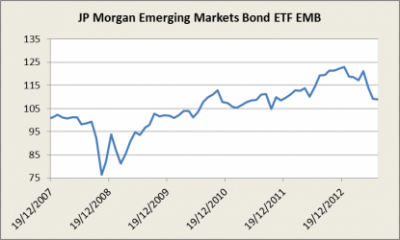 I am quite upbeat on the prospects for capital markets over the next few years. This optimism is based on a firm belief that the world’s central banks will continue to keep global monetary policy very easy until the unemployment rate in their various domains drops to an acceptable level. The first solid indication of this came from new Bank of England Governor Mark Carney who has now targeted an unemployment rate of 7% before slowing the quantitative easing policy. Despite the U.S. Federal Reserve making noises that they will slow the level of QE they will be keeping a beady eye on the unemployment rate, which they are targeting at 6.5% and will not do anything that might push unemployment higher, unless galloping inflation rears its ugly head. This is unlikely with the amount of excess capacity in the global economy. Once again one needs to look at what central bankers do, not what they say. Europe is just starting to stabilize and Mario Draghi will certainly continue to support the banking system throughout Europe and is clearly aware of the continental unemployment problem, the European Central Bank is nowhere near tightening and the Bank of Japan is still easing…

