
Canada has several major banks and many schedule II banks – but with rates and plans all over the map, it’s difficult to know where to bring your business. Our aim is to help you navigate Canada’s banking options to discover which one suits your needs best.
Latest News

How to find a collective or community kitchen in your area Apr 24th
Food banks, family resource centres and health agencies are also excellent resources for information about kitchens that might be starting in your neighbourhood..... More »
Fintech firms sharing unregulated advantage over Canadian banks + MORE Dec 16th
The speed at which banks can adapt to a newly competitive environment is hampered by the fact they must adhere to a strict and slow-to-change regulatory environment
.... More »
Canadians getting sick trying to cut food costs: study - CityNews Toronto + MORE Apr 27th
Canadians getting sick trying to cut food costs: study CityNews TorontoCanadian food banks are on the brink: ‘This is not a sustainable situation’ Global NewsCanadians are taking more risks with their food due to high prices National PostCHARLEBOIS: The hidden co.... More »
Institutional trust is the hallmark of a healthy economy Jul 20th
A citizenry’s faith in its government and banks can drive success
.... More »
Time for a reality check on bank stocks: Roseman Feb 3rd
Canadian banks do well in the long term as an investment, but often go through temporary declines. They’re in one now, but should recover..... More »
The Not-So-Golden Years: Credit Card Debt Rises Among Seniors
– ratesupermarket.ca

Retirement is meant to be a time to relax and enjoy the financial fruits of long years of labour – but there’s growing concern that older consumers are relying more heavily on debt in order to make ends meet, according to a new report from credit-monitoring firm Equifax Capital.
According to the report, Canadian consumer debt rose 6.1 per cent to $77 billion in the second quarter of 2013. This is mainly due to an 8.6 per cent increase in auto loan balances and a 7.4 per cent increase in outstanding mortgage debt.
“The increased demand for credit outside of mortgages is positive for the economy in the short-term, but could limit the ability of over-extended consumers to react to any financial bumps in the road in the future,” says Cristian deRitis, senior director of Consumer Credit Economics at Moody’s Analytics.
Seniors Debt Accumulation Outpacing Younger Generations
But it’s the slow creep of debt among the 65-plus crowd that is the most troubling stat from the report…
Fixed income markets are heating up
– moneysense.ca
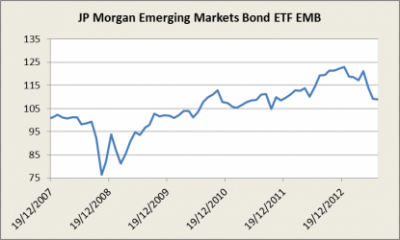 I am quite upbeat on the prospects for capital markets over the next few years. This optimism is based on a firm belief that the world’s central banks will continue to keep global monetary policy very easy until the unemployment rate in their various domains drops to an acceptable level. The first solid indication of this came from new Bank of England Governor Mark Carney who has now targeted an unemployment rate of 7% before slowing the quantitative easing policy. Despite the U.S. Federal Reserve making noises that they will slow the level of QE they will be keeping a beady eye on the unemployment rate, which they are targeting at 6.5% and will not do anything that might push unemployment higher, unless galloping inflation rears its ugly head. This is unlikely with the amount of excess capacity in the global economy. Once again one needs to look at what central bankers do, not what they say. Europe is just starting to stabilize and Mario Draghi will certainly continue to support the banking system throughout Europe and is clearly aware of the continental unemployment problem, the European Central Bank is nowhere near tightening and the Bank of Japan is still easing…

