
The “Big Five” Canadian banks include Royal Bank of Canada, Toronto Dominion Bank (TD Canada Trust), Bank of Nova Scotia, Bank of Montreal and Canadian Imperial Bank of Commerce (CIBC). Are there other viable options?
Latest News

The best GIC rates in Canada for 2024 + MORE May 29th
Investing
The best GIC rates in Canada for 2024
Find the best GIC rates in Canada. Plus, everything you need to know about how they work.
Find the best rate
Tap "Return to top" to come back here.
.... More »
New plan to clean river polluted where Agent Orange was made Mar 5th
NEWARK, N.J. – The federal government has unveiled a revised plan to clean up a heavily contaminated stretch of a river where Agent Orange was made.
The plan, unveiled Friday by the Environmental Protection Agency, calls for about 20 per cent less contaminated Passaic River mud to be removed c.... More »
The best GIC rates in Canada for 2026 Apr 8th
GIC comparison tool
Find the best and most up-to-date GIC rates in Canada using the comparison tool below. Plus, use the filters to assess your estimated rate of return based on the size of your balance.
Why trust us
MoneySense is an award-winning magazine, helping Canadians navigate m.... More »
The Best Things to Buy in April + MORE Apr 4th
April might be rainy in most places across the country but the warming temperatures are likely a welcome improvement. Get outside this month and enjoy the sun when it’s out, but make sure to take advantage of all the great deals that April has to offer as well.
April is a great month to save mone.... More »
Housing affordability: What happens when lower home prices take on higher borrowing costs? Sep 6th
Canadian home prices are falling. Borrowing costs are increasing at an incredible rate. It’s the battle royale of home ownership affordability: Will wannabe home owners benefit from the real estate market correction, or will their dreams be crushed by the rising mortgage costs that are causing it?.... More »
3 Mortgage Marketing Tactics You Should Be Aware Of
– ratesupermarket.ca

Spring is always a competitive season for mortgage lenders, but this year is a true standout; lenders small and large (including the Bank of Canada) have cut rates, some to historic lows – five-year fixed options have dipped as low as 2.44 per cent in some provinces, and even Canada’s big banks are offering rates below the 3 per cent threshold.
In fact, things have gotten so hot, that lenders are getting creative with their discounts; not content to simply offer the lowest rate, we’ve seen a few tactics this year that put a new spin on mortgage marketing. Here’s a look at what’s been introduced in the market so far.
Click here to see the best mortgage rates in your region>
Big Banks Getting in on the Game
Usually it’s brokers and other smaller lenders who push the pricing envelope – but in March, BMO and TD made headlines by cutting their 5-year fixed rates to 2.79 per cent – the lowest ever for large federally-regulated banks (TD has since cut further to 2…
NDP seeks ban on so-called ‘pay-to-pay’ fees at banks
– macleans.ca
OTTAWA – The NDP has called on Ottawa to ban so-called “pay-to-pay” fees charged by Canada’s big banks.
NDP MP Andrew Cash said Thursday that he wants an expanded code of conduct for the banks that is not voluntary.
“Offering the banks a voluntary code of conduct is like telling a cat to regulate its consumption of cat nip,” the NDP critic for consumer protection said.
Ottawa moved to block telecommunication and cable companies from charging fees for paper bills last year.
However, Cash said the banks were excluded from the legislation.
“You shouldn’t have to pay money to pay your bill; you shouldn’t have to pay money to pay your mortgage; you shouldn’t have to pay money to pay your student loan,” he said.
Finance Minister Joe Oliver said the government has taken action to improve access to low-cost and no-cost banking options.
“Our government believes with better information Canadian consumers can make informed choices which will be in their interest,” Oliver said in response to a question by Cash in the House of Commons…
NDP MP Andrew Cash said Thursday that he wants an expanded code of conduct for the banks that is not voluntary.
“Offering the banks a voluntary code of conduct is like telling a cat to regulate its consumption of cat nip,” the NDP critic for consumer protection said.
Ottawa moved to block telecommunication and cable companies from charging fees for paper bills last year.
However, Cash said the banks were excluded from the legislation.
“You shouldn’t have to pay money to pay your bill; you shouldn’t have to pay money to pay your mortgage; you shouldn’t have to pay money to pay your student loan,” he said.
Finance Minister Joe Oliver said the government has taken action to improve access to low-cost and no-cost banking options.
“Our government believes with better information Canadian consumers can make informed choices which will be in their interest,” Oliver said in response to a question by Cash in the House of Commons…
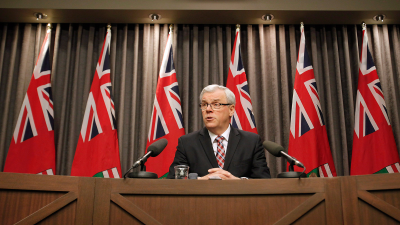 Manitoba Premier Greg Selinger. (The Canadian Press)
WINNIPEG – Smokers and banks will pay more to help pay for Manitoba’s spending on infrastructure in a deficit budget that borrows heavily from a dwindling rainy-day fund.
The governing NDP has tabled a $15-billion budget that boosts tobacco taxes by $1 a carton and increases the capital tax on financial institutions to six per cent from five per cent.
The budget — which includes a $422-million deficit — also increases tax credits for the caregivers of vulnerable relatives at home and boosts rental assistance for welfare recipients by up to $271 a household.
“We made a decision to invest in infrastructure. We made a decision to invest in health care. We made a decision to invest in education,” Finance Minister Greg Dewar said Thursday.
“Other provinces have taken a different route.”
The budget draws $105 million from Manitoba’s rainy-day fund to pay down debt and support infrastructure spending…
3 Mortgage Marketing Tactics You Should Be Aware Of
– ratesupermarket.ca

Spring is always a competitive season for mortgage lenders, but this year is a true standout; lenders small and large (including the Bank of Canada) have cut rates, some to historic lows – five-year fixed options have dipped as low as 2.44 per cent in some provinces, and even Canada’s big banks are offering rates below the 3 per cent threshold.
In fact, things have gotten so hot, that lenders are getting creative with their discounts; not content to simply offer the lowest rate, we’ve seen a few tactics this year that put a new spin on mortgage marketing. Here’s a look at what’s been introduced in the market so far.
Click here to see the best mortgage rates in your region>
Big Banks Getting in on the Game
Usually it’s brokers and other smaller lenders who push the pricing envelope – but in March, BMO and TD made headlines by cutting their 5-year fixed rates to 2.79 per cent – the lowest ever for large federally-regulated banks (TD has since cut further to 2…

