
Canada has several major banks and many schedule II banks – but with rates and plans all over the map, it’s difficult to know where to bring your business. Our aim is to help you navigate Canada’s banking options to discover which one suits your needs best.
Latest News



The Best Things to Buy in April + MORE Apr 4th
April might be rainy in most places across the country but the warming temperatures are likely a welcome improvement. Get outside this month and enjoy the sun when it’s out, but make sure to take advantage of all the great deals that April has to offer as well.
April is a great month to save mone.... More »
Scotia Momentum® VISA Infinite* Review May 15th
Attention MoneyWise readers! Sign up for the Scotia Momentum® VISA Infinite* card and, for a limited time, get $75 IN CASH via Interac e-Transfer or a gift card from RateSupermarket.ca upon approval!
Are you looking for a well-rounded, high-earning cash back credit card with travel perks and no a.... More »
National Bank profit falls on hit from energy sector; boosts dividend + MORE Jun 1st
The smallest of Canada’s six big banks had announced in May that it would set aside $250-million to cover bad loans to the sector
.... More »
Wealthsimple launches savings account with premium rate + MORE Apr 6th
TORONTO —Robo-adviser Wealthsimple is hoping to lure clients away from traditional financial institutions by launching a savings account with a premium interest rate.
The Smart Savings account, launched in Canada and the U.S. on Thursday, will offer a 1.7 per cent interest rate north of the border.... More »
The best student credit cards in Canada for 2023 Sep 13th
Credit Cards
The best student credit cards in Canada for 2023
Searching for the perfect credit card? In under 60 seconds, CardFinder narrows down your top matches without impacting your credit score, no SIN required.
Find my perfect card*
.... More »
Buying a car? A home? Fed rate increase shouldn’t matter much; ‘Most people won’t even notice’
– canadianbusiness.com
WASHINGTON – For anyone considering whether to buy a home or car, the Federal Reserve’s interest rate increase Wednesday shouldn’t make much difference.
The rates that most people pay for mortgages, auto loans or college tuition aren’t expected to jump anytime soon. The Fed’s benchmark interest rate has limited influence on those things.
Still, the Fed’s move to lift its key rate by a quarter-percentage point will raise short-term borrowing costs for banks. And that, in turn, is intended to prod banks to boost certain other rates. Rates on credit cards and home equity loans and credit lines, for example, will most likely rise, though probably only slightly.
The rate the Fed controls is only one factor among many that can influence longer-term borrowing costs. And the Fed made clear it will assess the economy’s health before raising rates further.
“Loans that are linked to longer-term interest rates are unlikely to move very much,” Fed Chair Janet Yellen said at a news conference…
The rates that most people pay for mortgages, auto loans or college tuition aren’t expected to jump anytime soon. The Fed’s benchmark interest rate has limited influence on those things.
Still, the Fed’s move to lift its key rate by a quarter-percentage point will raise short-term borrowing costs for banks. And that, in turn, is intended to prod banks to boost certain other rates. Rates on credit cards and home equity loans and credit lines, for example, will most likely rise, though probably only slightly.
The rate the Fed controls is only one factor among many that can influence longer-term borrowing costs. And the Fed made clear it will assess the economy’s health before raising rates further.
“Loans that are linked to longer-term interest rates are unlikely to move very much,” Fed Chair Janet Yellen said at a news conference…
U.S. Federal Reserve Liftoff: What Canadians Need to Know
– ratesupermarket.ca
The long-awaited Liftoff is here: the U.S. Federal Reserve has announced they are raising the Federal Funds Target Rate to 0.5%. It is the first time in seven years the Fed has increased their trend-setting interest rate, which they cut to 0 per cent on December 16, 2008. Markets had widely anticipated the move, with 81 per cent calling for a hike today.
Why This is Big News
As the U.S. is the largest economy in the world, any change it makes reverberates through the rest of the globe, impacting markets and even the cost of borrowing for other countries.
Generally, this is a good news story: the Fed raising rates is a sign that their economy has experienced real improvement since the financial crisis, and they’re gradually rolling back the measures relied on in the aftermath of the Great Recession.
Similar to how the Bank of Canada works, the Fed uses monetary policy to help manipulate the cost of borrowing for banks and consumers to keep money flowing and credit liquid during times of economic downturn…
Up From Zero
– online.wsj.com
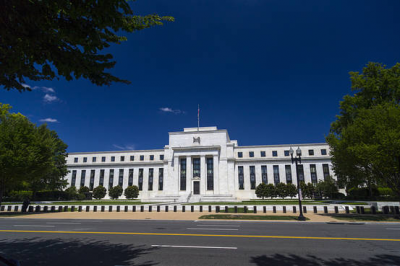 The Federal Reserve will pay bailed-out banks more money not to lend.
U.S. Federal Reserve hikes interest rates
– macleans.ca
TORONTO — The struggling Canadian dollar is expected to face more tough slogging ahead following Wednesday’s decision by the Federal Reserve to begin raising interest rates south of the border, analysts say.
The U.S. central bank announced it was lifting its key rate by a quarter-point to a range of 0.25 per cent to 0.5 per cent, ending a seven-year period of near-zero borrowing rates.
Scott Guitard, a portfolio manager at Fiduciary Trust Canada, predicts Canada’s central bank will keep its key lending rate unchanged after having cut it twice earlier this year in an attempt to stimulate the country’s struggling economy.
Ian Nakamoto, director of research at 3Macs, said the different paths of the two central banks have pushed the value of Canada’s dollar lower because investors look at the direction of interest rate policies when they’re choosing where to put their money.
Canada’s commodity-linked currency is also a less attractive option as oil prices continue to suffer while America’s recovery continues to gain strength…
The U.S. central bank announced it was lifting its key rate by a quarter-point to a range of 0.25 per cent to 0.5 per cent, ending a seven-year period of near-zero borrowing rates.
Scott Guitard, a portfolio manager at Fiduciary Trust Canada, predicts Canada’s central bank will keep its key lending rate unchanged after having cut it twice earlier this year in an attempt to stimulate the country’s struggling economy.
Ian Nakamoto, director of research at 3Macs, said the different paths of the two central banks have pushed the value of Canada’s dollar lower because investors look at the direction of interest rate policies when they’re choosing where to put their money.
Canada’s commodity-linked currency is also a less attractive option as oil prices continue to suffer while America’s recovery continues to gain strength…
U.S. Federal Reserve Liftoff: What Canadians Need to Know
– ratesupermarket.ca
The long-awaited Liftoff is here: the U.S. Federal Reserve has announced they are raising the Federal Funds Target Rate to 0.5%. It is the first time in seven years the Fed has increased their trend-setting interest rate, which they cut to 0 per cent on December 16, 2008. Markets had widely anticipated the move, with 81 per cent calling for a hike today.
Why This is Big News
As the U.S. is the largest economy in the world, any change it makes reverberates through the rest of the globe, impacting markets and even the cost of borrowing for other countries.
Generally, this is a good news story: the Fed raising rates is a sign that their economy has experienced real improvement since the financial crisis, and they’re gradually rolling back the measures relied on in the aftermath of the Great Recession.
Similar to how the Bank of Canada works, the Fed uses monetary policy to help manipulate the cost of borrowing for banks and consumers to keep money flowing and credit liquid during times of economic downturn…

