
Learn more about Canada’s top banks rates, rules and the latest news – read on!
Latest News

The best GIC rates in Canada for 2025 Apr 14th
GIC comparison tool
Find the best and most up-to-date GIC rates in Canada using the comparison tool below. Plus, use the filters to assess your estimated rate of return based on the size of your balance.
Why trust us
MoneySense is an award-winning magazine, helping Canadians navigate m.... More »
The best GIC rates in Canada for 2023 Oct 24th
Investing
The best GIC rates in Canada for 2023
Find the best GIC rates in Canada. Plus, everything you need to know about how they work.
Find the best rate
Tap "Return to top" to come back here.
.... More »
The best high-interest savings accounts in Canada for 2025 Feb 18th
Savings comparison tool
Find the best and most up-to-date savings rates in Canada using the comparison tool below. Plus, use the filters to assess your estimated return based on the size of your balance.
Why trust us
MoneySense is an award-winning magazine, helping Canadians navigate mo.... More »
The best student credit cards in Canada for 2023 Oct 12th
Credit Cards
The best student credit cards in Canada for 2023
Searching for the perfect credit card? In under 60 seconds, CardFinder narrows down your top matches without impacting your credit score, no SIN required.
Find my perfect card*
.... More »
The best GIC rates in Canada for 2024 Jun 4th
Investing
The best GIC rates in Canada
Find the best GIC rates in Canada. Plus, everything you need to know about how they work.
Compare now
Why trust us
MoneySense is an award-winning magazine,.... More »
Making sense of the markets this week: June 28
– moneysense.ca
 Each week, Cut the Crap Investing founder Dale Roberts shares financial headlines and offers context for Canadian investors.
Are the markets throwing a taper tantrum?
The term “taper” and the possibility of a “taper tantrum” jumped into business news and headlines this past week. What is all of this taper talk? And what does it mean for our stocks and bonds, and other investments?
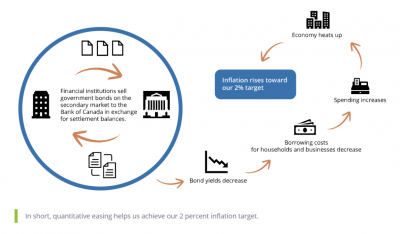
Here’s the background. To help keep rates low, central banks buy their own government bonds. That link to the Bank of Canada site explains the bond-buying process (termed QE, or quantitative easing). And here’s the rationale from that BOC page…
“QE sends a signal that we intend to keep our policy interest rate low for a long time—as long as inflation stays under control. By giving more certainty that our policy interest rate will remain low, QE can help reduce longer-term borrowing costs for businesses and households.”
And in chart form…
Source: Bank of Canada
Central banks are working to stimulate growth as part of their goal to achieve a 2% inflation target…

