
The “Big Five” Canadian banks include Royal Bank of Canada, Toronto Dominion Bank (TD Canada Trust), Bank of Nova Scotia, Bank of Montreal and Canadian Imperial Bank of Commerce (CIBC). Are there other viable options?
Latest News



International Vacation? Tips to Exchange Currency for the Best Rates + MORE Jul 31st
Whether it’s to the U.S. or elsewhere outside of Canada, your travel will mean transactions in another currency. You can get foreign cash before you leave, use local ATMs, put everything on your credit card, or depend on currency exchange brokers, to name a few. Here are the pros and cons of .... More »
Declined for a much-needed loan or credit card? There are other options Sep 21st
Unlike the major banks and payday lenders in Canada, the alternative lending market is less directly regulated, and that can expose consumers to greater risks when borrowing, Lesley-Anne Scorgie writes..... More »
At midday: Financial stocks lead TSX higher + MORE Jan 17th
Tech, industrials lead Wall Street higher, banks drop
.... More »
This mortgage loophole puts us at risk + MORE Jun 27th
If the Canadian housing market were to crash it would be catastrophic. At least, that’s the synopsis of the latest Moody’s Investors Service report.
According to their analysis the six big banks would lose nearly $12 billion while CMHC and other mortgage insurers would be on the hook for as muc.... More »
TD Cash Back Visa Card review Oct 28th
There isn’t much that rings sweeter than cash in your pocket, which is precisely the allure of the cash back credit card. Canada’s Big Five banks (and many smaller ones too) offer a wide range of credit cards that allow you to accumulate cash rewards simply by using them. And to maximize those r.... More »
New CMHC Guarantee Cap Could Raise Mortgage Rates
– ratesupermarket.ca

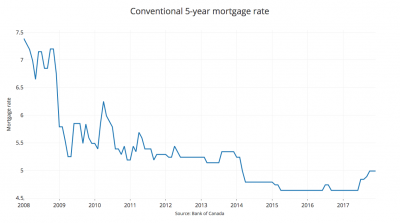
New restrictions were announced today by the Canadian Mortgage and Housing Corporation (CMHC) that could make it harder to qualify for a mortgage – and may also push mortgage rates to new highs.
The crown corporation has introduced a monthly cap on mortgage guarantees at $350 million for each mortgage lender, including all banks and credit unions. The move is the latest effort made by the government to slow the housing market and decrease Canadian household mortgage debt levels.
Prior to these changes, banks had access to an annual guarantee cap of $900 billion. However, a flux of new mortgages in 2013 has prompted the government to take further action to cool the housing market. The first step was implementing a $85-billion budget for 2013 under the National Housing act Mortgage Backed Securities program – but $66 billion of those funds have already been committed, as of the end of July. The new monthly cap has been put in place to counter this higher than expected mortgage volume…
New CMHC Guarantee Cap Could Raise Mortgage Rates
– ratesupermarket.ca

New restrictions were announced today by the Canadian Mortgage and Housing Corporation (CMHC) that could make it harder to qualify for a mortgage – and may also push mortgage rates to new highs.
The crown corporation has introduced a monthly cap on mortgage guarantees at $350 million for each mortgage lender, including all banks and credit unions. The move is the latest effort made by the government to slow the housing market and decrease Canadian household mortgage debt levels.
Prior to these changes, banks had access to an annual guarantee cap of $900 billion. However, a flux of new mortgages in 2013 has prompted the government to take further action to cool the housing market. The first step was implementing a $85-billion budget for 2013 under the National Housing act Mortgage Backed Securities program – but $66 billion of those funds have already been committed, as of the end of July. The new monthly cap has been put in place to counter this higher than expected mortgage volume…
New mortgage rules will hit banks’ liquidity
– theglobeandmail.com
Measure limiting access to government guarantees expected to cool stockpiling of easily sold assets
Mortgage news
– moneysense.ca
The CHMC is limiting guarantees it offers banks and other lenders on mortgage-backed securities which could in turn lead banks to raise interest rates on residential mortgages.
It’s official. Actuaries are now using updated tables that show we’re living roughly two years longer to calculate pension liabilities, says Towers Watson. So what does this mean for savers and investors? As life expectancy increases, employers will need to cover higher numbers of pensioners for longer periods of time, increasing pension liabilities and requiring larger pension contributions which could affect balance sheets fairly quickly. It also means workers with a defined-contribution plan could have to save more or delay retirement.
New time restrictions, fees and baggage requirements….Air Canada’s check-in crackdown needs fixing, writes Peter Nowak for Canadian Business.
It’s official. Actuaries are now using updated tables that show we’re living roughly two years longer to calculate pension liabilities, says Towers Watson. So what does this mean for savers and investors? As life expectancy increases, employers will need to cover higher numbers of pensioners for longer periods of time, increasing pension liabilities and requiring larger pension contributions which could affect balance sheets fairly quickly. It also means workers with a defined-contribution plan could have to save more or delay retirement.
New time restrictions, fees and baggage requirements….Air Canada’s check-in crackdown needs fixing, writes Peter Nowak for Canadian Business.
In its latest bid to bring down the mercury on Canada’s housing market, the Canadian government, through CMHC, will cap the guarantees it offers banks and other lenders on the mortgage-backed securities they issue. That could lead to higher borrowing costs.

