
All about Canadian investments. Learn the ins and outs and get the latest news.
Latest News


In a sign of growing economic ties, China allows direct currency trading with New Zealand + MORE Mar 19th
WELLINGTON, New Zealand – In another sign of growing economic ties, China on Wednesday allowed its currency to be directly traded with New Zealand’s.
New Zealand Prime Minister John Key announced the start of trading during a trip to China.
Previously, a company that needed to trade New .... More »
OSC alleges Davies law firm employee involved in insider-trading ring + MORE Sep 23rd
OSC says Donna Hutchinson, who worked as a legal assistant at Davies, tipped off stock trader Cameron Cornish on a series of takeover offers
.... More »
Bank of Canada raises interest rate to 1 per cent + MORE Sep 6th
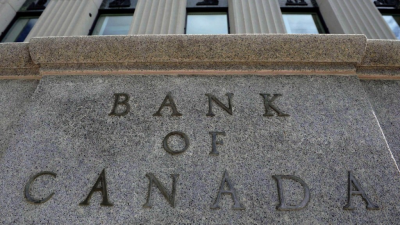
The Bank of Canada marker is pictured in Ottawa on September 6, 2011. (THE CANADIAN PRESS/Sean Kilpatrick)
OTTAWA – The Bank of Canada is once again raising its benchmark interest rate as it sees the economy’s powerful performance pointing to broader, more self-sustaining growth.
The central.... More »
Greater Vancouver home sales drop in July, new figures show + MORE Aug 3rd
The number of Vancouver area home sales dropped in July marking a return to more 'normal levels, according to statistics from the Real Estate Board of Greater Vancouver..... More »
Why it's a good idea to review your financial plan at least once a year Dec 24th
January is often a good time to conduct a budget review because you'll have the benefit of the full year's receipts and expenses, financial planner says.... More »
OTTAWA – It’s not just the temperatures that are freezing on this first day of 2014.
The federal government says it’s freezing Employment Insurance premiums, and generally keeping taxes low.
But the Canadian Taxpayers’ Federation says the EI “rate freeze” will actually mean that premiums will go up slightly for some.
In its annual New Year’s Tax Changes report, the federation calculates that maximum employee EI rates will go up by $23 in 2014 to $914.
It says maximum EI premiums paid by employers will also rise by $31 to $1,279.
Overall, EI premium rates will remain at 2013 levels, at $1.88 per $100 of insurable earnings.
The federation adds that Canada Pension Plan premiums will be hiked by $140 for workers earning at least $52,500 per year.
But there will be bigger tax breaks for people who donate to charities for the first time.
They will receive a credit of 40 per cent of the first $200 they donate, rather than the normal 15 per cent credit.
The tax credit for donations over $200 is also rising, to 54 per cent for first time donors, rather than the previous 29 per cent…
The federal government says it’s freezing Employment Insurance premiums, and generally keeping taxes low.
But the Canadian Taxpayers’ Federation says the EI “rate freeze” will actually mean that premiums will go up slightly for some.
In its annual New Year’s Tax Changes report, the federation calculates that maximum employee EI rates will go up by $23 in 2014 to $914.
It says maximum EI premiums paid by employers will also rise by $31 to $1,279.
Overall, EI premium rates will remain at 2013 levels, at $1.88 per $100 of insurable earnings.
The federation adds that Canada Pension Plan premiums will be hiked by $140 for workers earning at least $52,500 per year.
But there will be bigger tax breaks for people who donate to charities for the first time.
They will receive a credit of 40 per cent of the first $200 they donate, rather than the normal 15 per cent credit.
The tax credit for donations over $200 is also rising, to 54 per cent for first time donors, rather than the previous 29 per cent…
5.5 year – 2.35%
– ratesupermarket.ca
This GIC rate is offered by DUCA Financial Services and was updated on 2013-11-09. Click on the link above to get more details or apply online.
How long it takes Canadian CEOs to make as much as most of us do in a year
– canadianbusiness.com
Lots of people are talking about a study put out this morning by the Canadian Centre for Policy Alternatives about how the average Canadian CEO will earn as much by lunchtime today as the average Canadian does in a year. Now, you may or may not find that to be a persuasive argument about the state of income inequality in Canada — as our own Chris MacDonald has pointed out, determining the fairness of CEO pay is more complicated than it seems. But it did include some interesting data that we can slice a little more finely.
In the table below you can see the 100 most highly-paid CEOs in Canada, their company, and their total compensation (the CCPA includes everything from bonuses to stock options to pensions; in most cases such non-salary pay makes up a large majority of their overall compensation). Instead of just knowing how long it takes the average CEO to make the same amount that the average Canadian makes ($46,634), the right-hand column shows exactly how many hours or days it will take that CEO to make that amount…
In the table below you can see the 100 most highly-paid CEOs in Canada, their company, and their total compensation (the CCPA includes everything from bonuses to stock options to pensions; in most cases such non-salary pay makes up a large majority of their overall compensation). Instead of just knowing how long it takes the average CEO to make the same amount that the average Canadian makes ($46,634), the right-hand column shows exactly how many hours or days it will take that CEO to make that amount…
Is 25 too young to save? Not if you want to retire on time: experts
– canadianbusiness.com
TORONTO – When 20-somethings look ahead to the new year, saving for retirement is unlikely to top their list of financial worries.
But a new survey suggests that’s exactly where it should be, given that 70 per cent of people polled thought they could only afford to retire if they started saving by age 25.
It may seem like a daunting task for a generation known for its high debt levels, costly tuition fees and lacklustre job prospects, but experts say that doesn’t mean it’s impossible.
“There’s so much going on when you’re a young person just fresh out of school or trying to find your own way that it’s hard to prioritize everything,” said Brett Strano, a financial adviser with Edward Jones in Mississauga, Ont.
“The challenges that are posed with that is that no one really knows how to allocate their extra cash flow.”
Only 26 per cent of those surveyed, across various age groups, said they felt they had saved enough for retirement, a figure that dropped to 20 per cent among workers with a household income of less than $100,000…
But a new survey suggests that’s exactly where it should be, given that 70 per cent of people polled thought they could only afford to retire if they started saving by age 25.
It may seem like a daunting task for a generation known for its high debt levels, costly tuition fees and lacklustre job prospects, but experts say that doesn’t mean it’s impossible.
“There’s so much going on when you’re a young person just fresh out of school or trying to find your own way that it’s hard to prioritize everything,” said Brett Strano, a financial adviser with Edward Jones in Mississauga, Ont.
“The challenges that are posed with that is that no one really knows how to allocate their extra cash flow.”
Only 26 per cent of those surveyed, across various age groups, said they felt they had saved enough for retirement, a figure that dropped to 20 per cent among workers with a household income of less than $100,000…
A report from consultancy PwC found initial public stock offerings in the Canadian market raised $2.7 billion last year, up from $1.8 billion in 2012.

