
All about Canadian investments. Learn the ins and outs and get the latest news.
Latest News


How to calculate the adjusted cost base of inherited property Feb 6th
Ask MoneySense
I sold a building that I inherited over 20 years ago. I don’t know the adjusted cost base (ACB) or fair market value of the building in 2003. How do I determine the value?—Bill
Reporting the sale of a property in Canada
When you sell real estate, you need to report that sal.... More »
Some foreign buyers get break from tax they face on Vancouver real estate + MORE Mar 17th
A tax on foreign home buyers in Metro Vancouver is being changed to exempt people who have come to British Columbia as part of the provincial nominee program.
Premier Christy Clark says the exemption is aimed at helping attract skilled workers to the province, particularly in the tech sector.
The go.... More »
Making sense of the markets this week: June 14 Jun 11th
Each week, Cut the Crap Investing founder Dale Roberts shares financial headlines and offers context for Canadian investors.
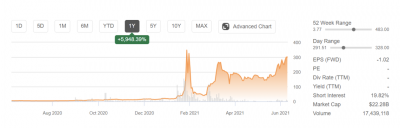
Meme stocks: They’re back…
I thought new investors would get tired of losing money. But I guess not.
Crowd co-ordinated investing in companies specifically to drive the .... More »
Why Vanguard’s ETF aimed at retirees is currently cautious in its asset allocation Feb 27th
As a semi-retired investor who recently started a registered retirement income fund (RRIF), I regard exchange-traded funds (ETFs) from Vanguard Group as a major part of my core portfolio, along with low-volatility ETFs from BMO ETFs, and income-oriented ETFs from various other vendors.
After the .... More »
Are you really ready to retire? Why many Canadians are struggling with retirement planning Mar 24th
Despite best intentions, many Canadians are not financially prepared for retirement. This reality is driven by a combination of factors: rising costs of living, growing debt levels, insufficient personal savings, and a lack of proper planning. Unexpected life events such as health challenges, job lo.... More »
How to get a better divorce settlement
– moneysense.ca
 Divorces are tricky business and have plenty of emotional—and financial—implications for all involved. Who’s getting custody? Who’s getting the house? And where have they hidden the keys to the cottage? No matter how great an attorney you have, it might be useful to have a financial planner on hand to sort through and help you understand the tax and money issues that come up during the process of separation, say the experts at Advisor.ca:
Collaborative law is an approach that uses “interest-based” negotiation. In contrast to the traditional approach, which often yields only losers, collaborative law aims to create a win-win result for clients.
Increasingly, financial planners have become an important part of the negotiating team in out-of-court divorce settlements. Collaborative Practice Toronto suggests advisors can help clients by:
• identifying, clarifying, and prioritizing financial needs and concerns (needs during or after the legal process);
• determining adequate budget and financial arrangements for the children’s changing needs; and
• contrasting and comparing different settlement scenarios, and empowering spouses to make fully informed financial decisions…
Fed survey finds US economy still expanding
– canadianbusiness.com
WASHINGTON – The Federal Reserve said Wednesday that the economy kept expanding in late February and March, despite weakness in the energy sector and a slowdown in exports of some factory and farm products because of global weakness and the strong dollar.
The Fed’s latest survey of business conditions in its 12 districts found that consumer spending was rising modestly and wages were increasing in all districts except Atlanta. Fed officials are hoping to see a pickup in wages after a prolonged period of weak wage growth following the Great Recession.
The survey, known as the Beige Book, will be considered at the Fed’s next meeting on April 26-27.
Economists expect the Fed to keep its benchmark policy rate unchanged in a range of 0.25 per cent to 0.5 per cent. The Fed boosted the rate by a quarter-point in December after keeping it at a record low near zero for seven years.
It kept rates unchanged in January and March, preferring to see what the fallout of a spreading global slowdown and turbulent financial markets would be on the U…
The Fed’s latest survey of business conditions in its 12 districts found that consumer spending was rising modestly and wages were increasing in all districts except Atlanta. Fed officials are hoping to see a pickup in wages after a prolonged period of weak wage growth following the Great Recession.
The survey, known as the Beige Book, will be considered at the Fed’s next meeting on April 26-27.
Economists expect the Fed to keep its benchmark policy rate unchanged in a range of 0.25 per cent to 0.5 per cent. The Fed boosted the rate by a quarter-point in December after keeping it at a record low near zero for seven years.
It kept rates unchanged in January and March, preferring to see what the fallout of a spreading global slowdown and turbulent financial markets would be on the U…
The federal agency tasked with curbing money laundering has been stepping up its efforts to educate real estate agents about their obligations to monitor and report suspicious transactions, documents show.
BoC holds key interest rate, upgrades growth forcast
– moneysense.ca
OTTAWA – The Bank of Canada says the federal government’s multibillion-dollar spending boost has uplifted what would have been a modest downgrade to its economic growth forecast this year.
The central bank also kept its trend-setting interest rate locked at 0.5 per cent Wednesday, but it would have considered lowering the benchmark if not for the federal stimulus in areas such as infrastructure.
The bank expects the federal investments of about $25 billion over the next two years to more than offset the negative consequences of a slightly stronger dollar, weaker-than-expected global growth and shrinking investment in the oil sector.
It is now predicting the country’s real gross domestic product to expand by 1.7 per cent in 2016, up from its January expectation of 1.4 per cent.
The bank said unexpectedly strong growth in the first three months of 2016 was partly due to temporary factors and that is expected to fade with the recent rise in the loonie and slower international demand…
The central bank also kept its trend-setting interest rate locked at 0.5 per cent Wednesday, but it would have considered lowering the benchmark if not for the federal stimulus in areas such as infrastructure.
The bank expects the federal investments of about $25 billion over the next two years to more than offset the negative consequences of a slightly stronger dollar, weaker-than-expected global growth and shrinking investment in the oil sector.
It is now predicting the country’s real gross domestic product to expand by 1.7 per cent in 2016, up from its January expectation of 1.4 per cent.
The bank said unexpectedly strong growth in the first three months of 2016 was partly due to temporary factors and that is expected to fade with the recent rise in the loonie and slower international demand…
Race and riches by the numbers
– moneysense.ca
 When it comes to determining your odds of becoming a millionaire, education and age count—though not nearly as much as the colour of your skin. These are the provocative findings of a study conducted by economists at the Federal Reserve Bank of St. Louis and Bloomberg News, which surveyed 12,500 U.S. households between 2010 and 2013. While their research showed that higher levels of education generally boost the likelihood of obtaining wealth for all racial and ethnic groups, the deck is clearly stacked in favour of whites and Asians—so much so that a white high school graduate is just as likely to become a millionaire as a black person with a college degree. The figures below offer illuminating insight into the true state of race and wealth in North America.
The post Race and riches by the numbers appeared first on MoneySense.

