
All about Retirement Planning in Canada. Learn the ins and outs and get the latest news.
Latest News




I’m decades from retirement. Do I really need to contribute to my RRSP? + MORE Mar 15th
The biggest issue with contributing to an RRSP too early is the need down the road to withdraw the money for expenses other than retirement that come along, says experts.... More »
How are FIRE adherents making out? + MORE May 23rd
In the increasingly specialized world of financial blogging, there’s a subgenre of so-called “FIRE” experts, who expound on the acronym FIRE. FIRE stands for Financial Independence Retire Early. Some proponents are in their 40s or 50s and practising what they preach, having either reached fina.... More »
Harper pledges higher RRSP withdrawal limit for homebuyers + MORE Aug 13th
The Conservatives would let first-time buyers take $35,000 from their RRSPs to pay for homes if they’re re-elected, said Stephen Harper during a campaign stop in Vancouver on Wednesday.
Under the Home Buyers’ Plan, new buyers can currently take $25,000 from their registered retirement plans, tax.... More »
Making sense of the markets this week: July 3 + MORE Jul 6th
While regular “Making sense of the markets” columnist Kyle Prevost is on vacation, Dale Roberts and I are filling in. Dale’s piece ran last week, and it’s my turn this week. Dale will return next week, after which a well-rested Kyle will resume.
Speaking of Dale, this week he wrote .... More »
30 and no pension: What are your options? Sep 6th
Alexandre Crupi has a lot of expenses. The 31-year-old investment specialist at Steadyhand Investment Funds, along with his fiancee, are paying for a September wedding. Then there’s the cost of their forthcoming honeymoon. They hope some day to buy a house. On top of all that, Crupi doesn’t curr.... More »
Government of Canada considering 50-year bonds
– moneysense.ca
OTTAWA – Ottawa says it may soon issue a 50-year Government of Canada bond.
The Finance Department says it is considering issuing the long-term bond through a process of syndication in the near future, if market conditions are right.
It says given the current low yield environment issuing such bonds in the ultra-long sector would contribute to a reduction in future refinancing risk.
Currently the longest maturing federal bond is 30 years.
Bank of Montreal chief economist Doug Porter says there would be advantages for the government if it were able to borrow money for half a century at a cost not much higher than the 2.94 per cent currently on the 30-year bonds.
He says insurance companies and pension funds would be the natural customers for such long-term treasury bills.
The post Government of Canada considering 50-year bonds appeared first on MoneySense.
The Finance Department says it is considering issuing the long-term bond through a process of syndication in the near future, if market conditions are right.
It says given the current low yield environment issuing such bonds in the ultra-long sector would contribute to a reduction in future refinancing risk.
Currently the longest maturing federal bond is 30 years.
Bank of Montreal chief economist Doug Porter says there would be advantages for the government if it were able to borrow money for half a century at a cost not much higher than the 2.94 per cent currently on the 30-year bonds.
He says insurance companies and pension funds would be the natural customers for such long-term treasury bills.
The post Government of Canada considering 50-year bonds appeared first on MoneySense.
TORONTO – The best way to secure retirement for more Canadians is with a third option for pension plans, and not the way Ontario is approaching the problem by expanding the Canada Pension Plan, says Kevin Sorenson, minister of state for finance, on Thursday.
The federal government wants to create a target-benefit plan, or shared-risk plan, as an alternative to defined-benefit plans, generally favoured by workers, and defined-contribution plans, which are favoured by employers. It’s billing the new framework as a “sustainable and flexible” option, which will only be available for Crown corporations and federally-regulated workers in the transportation, banking and telecommunications sectors.
“We need to have a third option,” said Sorenson following the announcement during a speech at the Economic Club of Canada in Toronto.
“We are not picking and choosing for Canadians. We want the defined-benefit plan there as a choice, we want the defined-contribution plan to be an option and we want the target-benefit plan to be an option…
The federal government wants to create a target-benefit plan, or shared-risk plan, as an alternative to defined-benefit plans, generally favoured by workers, and defined-contribution plans, which are favoured by employers. It’s billing the new framework as a “sustainable and flexible” option, which will only be available for Crown corporations and federally-regulated workers in the transportation, banking and telecommunications sectors.
“We need to have a third option,” said Sorenson following the announcement during a speech at the Economic Club of Canada in Toronto.
“We are not picking and choosing for Canadians. We want the defined-benefit plan there as a choice, we want the defined-contribution plan to be an option and we want the target-benefit plan to be an option…
Do bonds still belong in an RRSP?
– moneysense.ca
It has long been conventional wisdom that bonds should be held in RRSPs wherever possible, since interest income is fully taxable. Once you run out of contribution room, equities can go in a non-registered account, because Canadian dividends and capital gains are taxed more favorably. But is this idea still valid? That’s the question Justin Bender and I explore in our new white paper, Asset Location for Taxable Investors.
Here’s an example we used to illustrate the problem. Assume you’re an Ontario investor with a marginal tax rate of 46.41%. Your non-registered account holds $1,000 in Canadian equities that return 8%, of which 3% is from eligible dividends and 5% is a realized capital gain. You would pay $8.86 in tax on the dividend income ($30 x 29.52%) and $11.60 on the realized capital gain ($50 x 23.20%), for a total of $20.46. Meanwhile, a $1,000 bond yielding 5% (or $50 annually) would be taxed at your full marginal rate, resulting in a tax bill of $23.21.
In this example, even though the total return on the stocks was higher (8% versus 5%) the amount of tax payable on the bond holding was significantly greater…
Here’s an example we used to illustrate the problem. Assume you’re an Ontario investor with a marginal tax rate of 46.41%. Your non-registered account holds $1,000 in Canadian equities that return 8%, of which 3% is from eligible dividends and 5% is a realized capital gain. You would pay $8.86 in tax on the dividend income ($30 x 29.52%) and $11.60 on the realized capital gain ($50 x 23.20%), for a total of $20.46. Meanwhile, a $1,000 bond yielding 5% (or $50 annually) would be taxed at your full marginal rate, resulting in a tax bill of $23.21.
In this example, even though the total return on the stocks was higher (8% versus 5%) the amount of tax payable on the bond holding was significantly greater…
Pension crisis…what crisis?
– moneysense.ca
 Creative Commons/Chriscom
Pensions seem to be a political football that no Canadian politician can resist kicking around. The latest “solution” coming out of Ottawa, floated Thursday, is a new hybrid “target-benefit” pension scheme that would be a sort of middle ground between traditional defined-benefit pensions and the more market-oriented defined-contribution plans favored by modern employers.
I was once briefly enrolled in something like this in the late 1990s when working at the Financial Post. At the time, management was encouraging staff to switch from the DB pension to something called TRIPP, which was basically a defined-contribution plan that “targeted” a certain retirement benefit in the future, but of course this “target” was not a guaranteed promise. In my case, at least, it was ultimately rolled back into my personal RRSP, and it was not a staggeringly large sum. After a few more corporate reorganizations, most of us ended up back in a more traditional DB pension, or opted out to maximize our RRSP room…
Cut Your Tax Bill for Next Year by Sharing Your Pension
– rhondasherwood.com
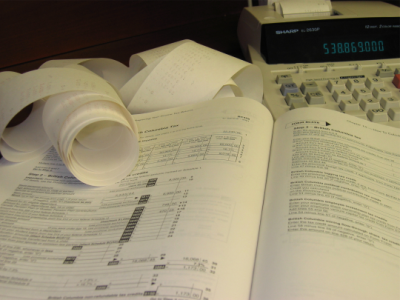
Now that the 2013 tax season is just about finished and either have submitted or are in the process of preparing your return, are you happy the result? No one wants to overpay when it comes to income taxes. You may be able to cut your tax bill for next year by sharing your pension. Now the perfect time to look at some options you may want to consider to ease your tax burden in 2013.
Strategies to Help Cut Your Tax Bill for Next Year
• Share Your Canada Pension Plan (CPP) Benefit
If you and your spouse or partner are over the age of 60, you can apply to share the Canada Pension Plan Benefit. If both of you are currently receiving CPP benefits, the payments can be adjusted so that both of you are receiving the same amount. If only one of you is receiving a CPP benefit, it can be divided so that you and your spouse each receive half.
You must apply for the assigning of benefits, but you only need to do so once. The pension sharing cannot be backdated.
The arrangement will continue as long as you are in a relationship with your spouse or partner…

