
Not sure how to make a savings plan? Read on…
Latest News


The best high-interest savings accounts in Canada for 2026 + MORE Mar 11th
Savings comparison tool
Find the best and most up-to-date savings rates in Canada using the comparison tool below. Plus, use the filters to assess your estimated return based on the size of your balance.
Advertisement
Why trust us
MoneySense is an.... More »
Are you really ready to retire? Why many Canadians are struggling with retirement planning + MORE Mar 25th
Despite best intentions, many Canadians are not financially prepared for retirement. This reality is driven by a combination of factors: rising costs of living, growing debt levels, insufficient personal savings, and a lack of proper planning. Unexpected life events such as health challenges, job lo.... More »
2022 Income Tax Guide for Canadians: Deadlines, tax tips and more + MORE Feb 27th
It’s been quite a year for numbers, hasn’t it? From rising interest rates to steep stock market drops, finances have been headline news throughout 2022. It’s almost enough to make you forget about tax season. But with the tax deadline approaching, you have a few reminders (see the dates below).... More »
Will credit card debt affect my mortgage application? Mar 27th
If you’re shopping around for a mortgage, you probably already know that lenders ask for a ton of financial information before determining how much you can borrow. That list includes your household income and how much you owe—including credit card debt, car payments and unsecured personal loans..... More »
Interest Rate Hike, Even A Small One, Could Be Trouble For 1 Million Canadians + MORE Sep 14th
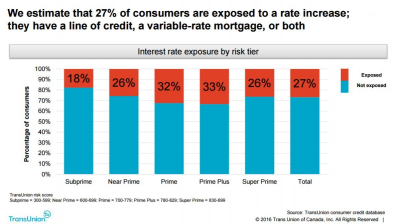
TORONTO -- Up to one million Canadian borrowers could face problems paying their debts if interest rates rise by a full percentage point including some of the highest rated consumers, a report released Tuesday by TransUnion suggests.
The credit reporting agency said that while the majority of Canad.... More »
Canadians are increasingly buying too much car and paying for it with loans that extend for six, seven and eight years, according to a federal consumer watchdog.

