
There are plenty of bank savings account options in Canada! Stay on top of the best plans right here.
Latest News



RRSPs, DCPPs, CPP, oh my! + MORE Oct 5th
Q: I’m 56 and would like to retire at 60. I have a defined contribution pension plan. Would it be wise to draw RSP only until 65 and leave CPP and DCP to grow?
—Daniel
A: I find there can be a lot of confusion around Defined Contribution (DC) pension plans, so let’s seek to clarify some.... More »
RESP vs RRSP and TFSA: What’s the best option for education savings? + MORE Aug 28th
Welcome to Education Money, a new column that covers the questions and concerns parents and investors have about funding their child’s education. Andrew Lo, CEO of Embark, shares his thoughts and insights on how to make the most of RESPs. To kick off the column, he explains the different options C.... More »
What types of tax-free savings accounts (TFSAs) exist? + MORE Jun 19th
A tax-free savings account (TFSA) is a fantastic way to earn money on your savings, without having to pay tax on those earnings. Registered by the federal government, TFSAs are available to Canadians aged 18 and older. Unlike a registered retirement savings plan (RRSP), you cannot deduct contributio.... More »
2022 Income Tax Guide for Canadians: Deadlines, tax tips and more + MORE Feb 27th
It’s been quite a year for numbers, hasn’t it? From rising interest rates to steep stock market drops, finances have been headline news throughout 2022. It’s almost enough to make you forget about tax season. But with the tax deadline approaching, you have a few reminders (see the dates below).... More »
Canadian second-hand economy spending up $1B + MORE Mar 15th
Around 82% of Canadians took part in the second-hand economy last year spending $29 billion in second-hand transactions; this according to the Kijiji Second-Hand Economy (SHE) Index – 2017 Report.
That’s an increase of $1 billion from the previous year!
Are you surprised to see such big numbers.... More »
Canadian Debt Levels Are Higher Than Ever… But We’re Not Worried
– ratesupermarket.ca

When it comes to financial goals, debt repayment is the top New Year’s Resolution for many Canadians. In a blog post I wrote just last month, I discussed how Ontarians are choosing debt over retirement savings. Despite the fact that we’re finally starting to listen to the Bank of Canada’s message that interest rates aren’t going to be low forever, Canadians keep piling on debt. Even if you want to repay your debt, it could take some people a few years or longer to get their debt fully paid off.
Consumer Debt Continues to Rise
The facts don’t lie – Canadians love spending. The household debt-to-income ratio hit a new high in the third quarter of 2013, reaching 163.7 per cent. Although it’s not the best measure of consumer debt, it shows that Canadians continue to take on debt, despite the warning bells.
A recent survey from Equifax paints an even bleaker picture. Consumer debt, including mortgages, in Canada totaled $1.422 trillion in the fourth quarter of 2013, according to credit rating service…
2014 Conservative Budget Highlights You Should Know About
– ratesupermarket.ca

This Tuesday, February 11, 2014, Finance Minister Jim Flaherty unveiled the 2014 federal budget. While the government is still focused on eliminating the country’s deficit – it’s currently projected to be about $2.9 billion this year – there are a few carrots for some Canadians in this latest rendition. Here’s our breakdown of what to look for from the government this year.
No Income Splitting… Ever?
First off, one anticipated budget item that didn’t actually the cut is income splitting. Income splitting, which would allow Canadian families to “share” up to $50,000 of income in order to reduce their marginal tax rate, was a key part of the Conservatives election campaign platform in 2011.
While not particularly fiscally conservative (the plan could cost federal coffers up to $2.5 billion in lost tax revenue), it’s intended to target the more socially conservative wing of the party’s support. Specifically: families with stay-at-home moms. Critics have argued that the program would only really benefit a small percentage of Canada’s wealthiest families, while offering no tax-savings for single-parent families, or those where both parents are working for comparable, modest salaries and having to pay for childcare…
How to cut your hydro bill without really trying
– thestar.com
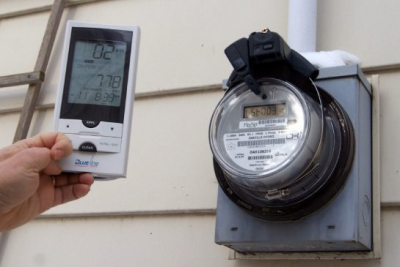 Energy prices are going nowhere but up. Home energy monitors are one way to help you find savings.
How to cut your hydro bill without really trying
– thestar.com
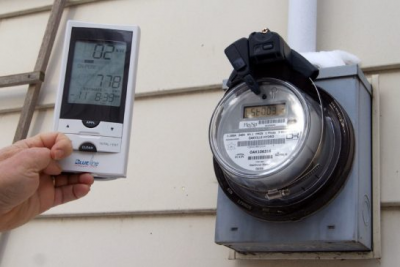 Energy prices are going nowhere but up. Home energy monitors are one way to help you find savings.

