
The “Big Five” Canadian banks include Royal Bank of Canada, Toronto Dominion Bank (TD Canada Trust), Bank of Nova Scotia, Bank of Montreal and Canadian Imperial Bank of Commerce (CIBC). Are there other viable options?
Latest News



Is now the time for retirees to sell stocks and buy GICs? Aug 2nd
Ask MoneySense
My husband is retired and concerned that his money that is invested in his RRSP and TFSA is fluctuating too much. He is retired and is wondering if his funds should be in a GIC account as it’s paying 4% and not losing principal. He’s concerned in this volatile market.—Rodeen
.... More »
Visa vs. Mastercard: What are the differences (and do they really matter)? Jun 19th
A frequent question we hear at MoneySense is: Which is better—Visa or Mastercard? When looking for a credit card, there are all sorts of things to consider. What is the interest rate? Can you collect rewards points or get cash back for making purchases? Is there a bonus for signing up, and what ar.... More »
Financial Institution Numbers for All Canadian Banks Apr 1st
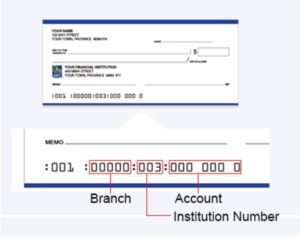
You can identify Canadian financial institutions by their bank institution number, which is always three digits long. Bank customers need this number anytime they want to set up a direct deposit or preauthorized payment or receive a wire transfer into their account.
How to Locate Canadian Bank Insti.... More »
Credit unions compete with big banks in race to attract younger Canadians Jul 27th
Learn more about Canada's top banks rates, rules and the latest news - read on!
Credit unions compete with big banks in race to attract younger Canadians - thestar.comContinue Reading On thestar.com »Getting a favourable bank account in Canada can be tricky - let us help! Visit our Canadian .... More »
The best banks in Canada Oct 17th
Most Canadians are aware of the Big Five banks: RBC, TD, Scotiabank, BMO and CIBC. And some may even know that occasionally National Bank of Canada sneaks in and expands that list to six. But even with these accounted for, there are dozens of banks in this country, each offering its own suite of per.... More »
Monthly fee for identity theft protection? Not worth it
– moneysense.ca
Canadians rattled by the massive Equifax data breach may turn to credit monitoring and anti-identify theft services for peace of mind, but in most cases they’ll be paying more for what is presently available for little or no cost, according to experts.
Consumers can already contact the two main credit bureaus, Equifax and TransUnion, by mail, fax or telephone to receive a physical copy of their credit report, or access it online, usually for a fee. The Financial Consumer Agency of Canada recommends requesting from one bureau, then waiting six months before ordering from the other.
READ: Equifax revises number of Canadians affected by hack
It also warns that fraudsters may offer free credit scores in an attempt to share your personal information —adding to the complexity of the existing web of credit monitoring services.
However, amid an increasing number of high-profile cyberattacks in recent years, Equifax, TransUnion and some Canadian banks and fintechs have introduced identity theft protection and credit monitoring services…
Consumers can already contact the two main credit bureaus, Equifax and TransUnion, by mail, fax or telephone to receive a physical copy of their credit report, or access it online, usually for a fee. The Financial Consumer Agency of Canada recommends requesting from one bureau, then waiting six months before ordering from the other.
READ: Equifax revises number of Canadians affected by hack
It also warns that fraudsters may offer free credit scores in an attempt to share your personal information —adding to the complexity of the existing web of credit monitoring services.
However, amid an increasing number of high-profile cyberattacks in recent years, Equifax, TransUnion and some Canadian banks and fintechs have introduced identity theft protection and credit monitoring services…
Drop and Carrot: How to Gain Rewards for Not Doing Much
– ratesupermarket.ca

Sometimes, the potential to earn free stuff is just too good to let up, which is why your keychain is likely filled with dozens of membership key tags. There are so many different rewards programs out there – store rewards, credit card rewards, restaurant rewards – and it may feel impossible to stick to just a few.
Does your wallet look like this?
They all seem great at first, and the sign-up process may be easy, but some programs then require you to spend money or do additional work before you can reap the benefits. That’s why it’s important to educate yourself on the program before taking the time to sign up. While some people may be willing to put in the work and wait, fortunately, there are a few passive reward programs that don’t require you to do much.
As of late, two of the most popular reward points programs are Drop and Carrot – mobile apps that allow you to choose what type of rewards you earn with what seems like no (or very little) extra work required on your end…
Canada’s marijuana industry banks on BMO and TD
– theglobeandmail.com
Even with legalization on the horizon, RBC and Scotiabank still just say no to doing business with burgeoning cannabis sector

